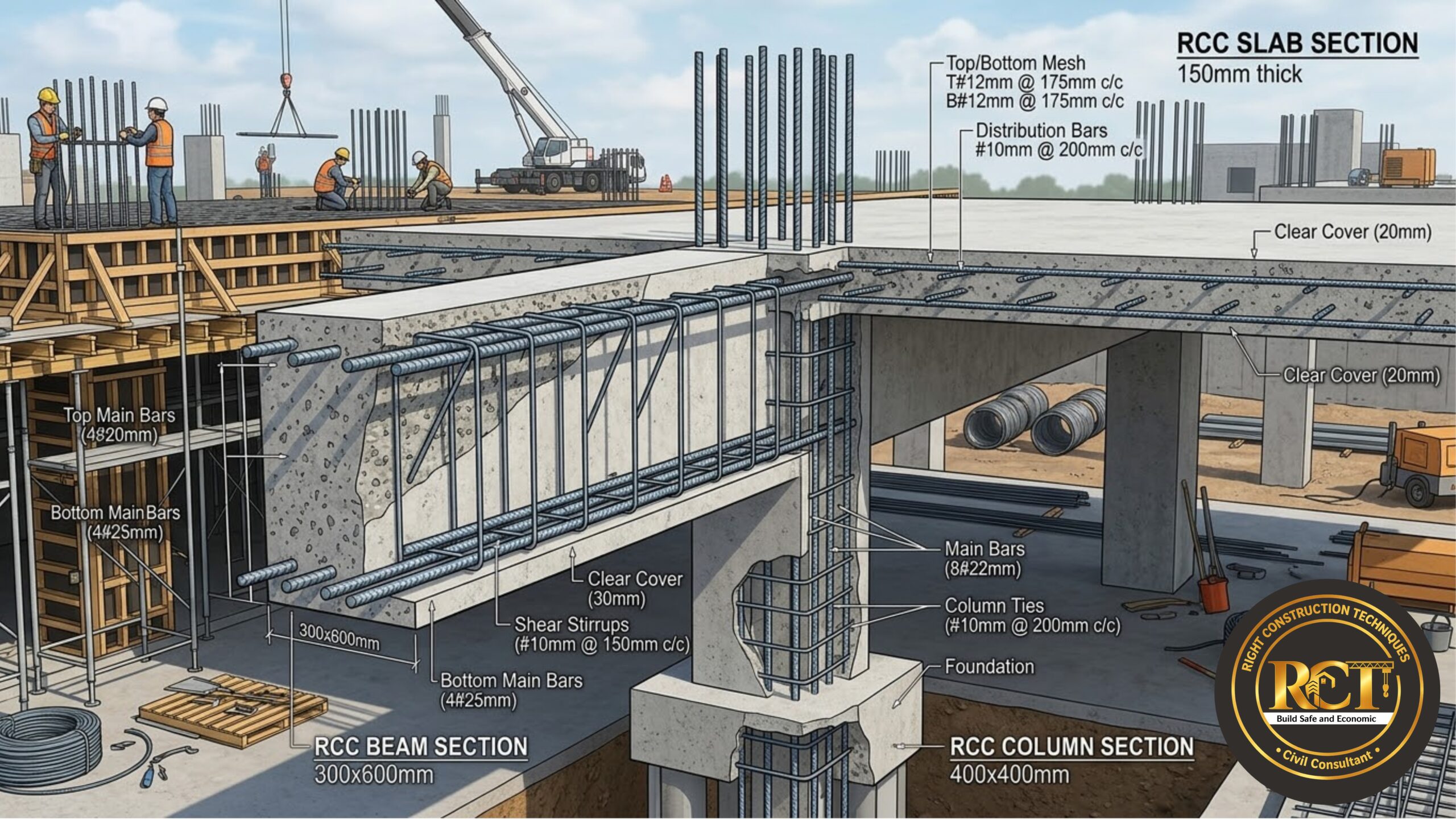
Reinforced Cement Concrete (RCC) is the backbone of modern construction, used in almost every structure—from residential buildings to large infrastructure projects. While concrete is highly durable and strong in compression, it has a major limitation: it is very weak in tension. This is where reinforcement plays a crucial role.
By embedding steel bars within concrete, engineers create a composite material that can effectively resist compressive, tensile, and shear forces. This combination not only enhances the strength of the structure but also improves its durability, safety, and service life.
Understanding the basics of reinforcement—such as its purpose, placement, and detailing in different structural elements like columns, beams, and slabs—is essential for every civil engineer, site supervisor, and construction professional.
In this guide, we will cover all the fundamental concepts of reinforcement in a simple and practical way, based on standard construction practices and IS codes.
Purpose of Reinforcement
Concrete has the following fundamental properties:
- Strong in compression
- Weak in tension
Concrete possesses very high compressive strength, but its tensile strength is significantly low—approximately 90% weaker in tension than in compression.
Because of this, when a structural element is subjected only to compressive loads, reinforcement is generally not required. However, in real-life structures such as beams and slabs, tensile forces are always present. In such cases, plain concrete alone becomes unsafe and may lead to cracking or failure.
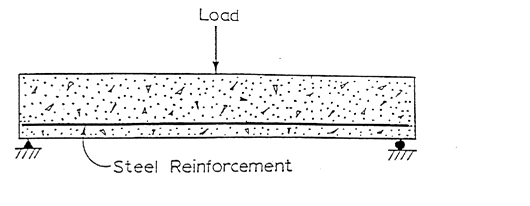
To overcome this limitation, steel reinforcement is used. Steel has very high tensile strength (and also good compressive strength), making it an ideal material to complement concrete.
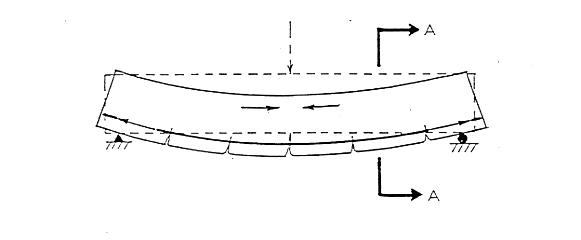
When concrete and steel are combined, they form a composite material known as Reinforced Cement Concrete (RCC). This material is capable of resisting:
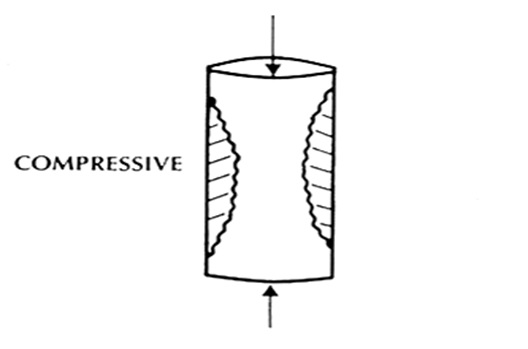
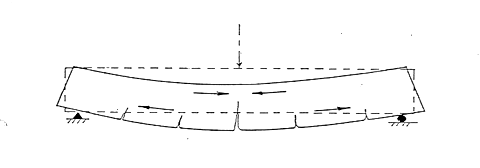
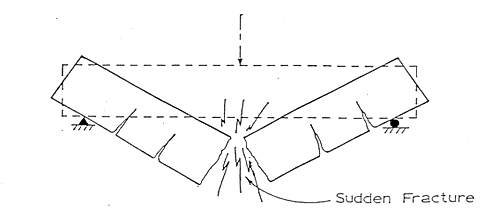
Compressive Forces on Concrete
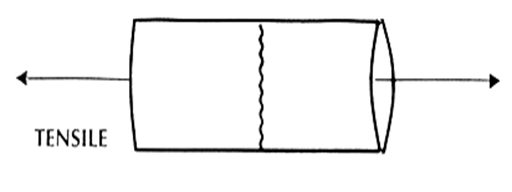
Tensile Forces on Concrete
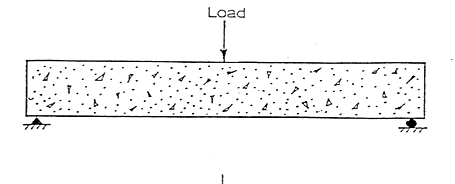
Non-reinforced Concrete Behavior
Reinforced Concrete Behavior
Reinforcement in Column
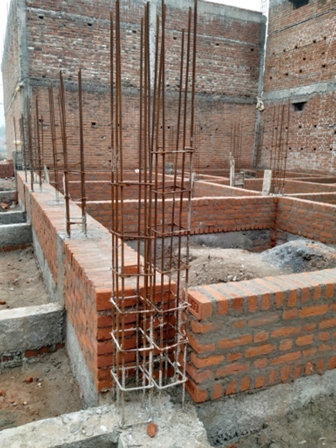
Reinforcement plays a vital role in improving the strength and efficiency of columns. It helps in reducing the overall size of the column while maintaining the required load-carrying capacity.
Important Points:
- Reinforcement is provided to enhance strength and reduce the size of the column.
- Reinforcement steel must be clean and free from rust, loose scale, mud, or oil, especially oil from formwork, to ensure proper bonding with concrete.
- Both main reinforcement bars and stirrups should be cut and placed as per the required length and design specifications.
Arrangement of Reinforcement:
The main reinforcement in columns is longitudinal, meaning it runs parallel to the direction of the load. These bars are arranged in different shapes depending on the column type, such as:
- Circular
- Square
- Rectangular
Column Reinforcement Requirements
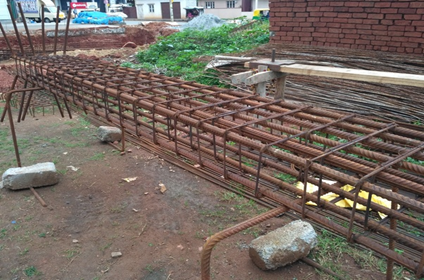
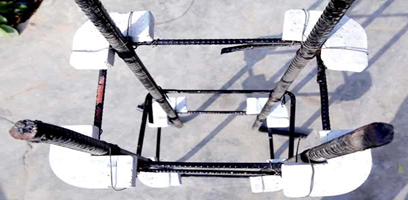
In RCC columns, the main (longitudinal) reinforcement works together with concrete to resist compressive loads and improve the overall strength of the structure.
Steel Percentage (Ast Requirement):
- Minimum steel (Ast): 0.8% of cross-sectional area
- Maximum steel (Ast): 6% of cross-sectional area
Basic Reinforcement Rules:
Minimum 40 mm clear cover should be provided to protect reinforcement
Minimum Number of Bars:
Rectangular column: 4 bars
Circular column: 6 bars
Minimum Diameter of Longitudinal Bars:
Not less than 12 mm
Minimum Diameter of Lateral Reinforcement (Stirrups):
Should be at least 6 mm, or
One-fourth of the diameter of main bars, whichever is less
Clear Cover: Minimum 40 mm clear cover should be provided to protect reinforcement
Column Reinforcement Requirements
In RCC columns, the main (longitudinal) reinforcement works together with concrete to resist compressive loads and improve the overall strength of the structure.
Steel Percentage (Ast Requirement):
- Minimum steel (Ast): 0.8% of cross-sectional area
- Maximum steel (Ast): 6% of cross-sectional area
Basic Reinforcement Rules:
Minimum 40 mm clear cover should be provided to protect reinforcement
Minimum Number of Bars:
Rectangular column: 4 bars
Circular column: 6 bars
Minimum Diameter of Longitudinal Bars:
Not less than 12 mm
Minimum Diameter of Lateral Reinforcement (Stirrups):
Should be at least 6 mm, or
One-fourth of the diameter of main bars, whichever is less
Clear Cover: Minimum 40 mm clear cover should be provided to protect reinforcement
Spacing and Anchorage Requirements in Columns
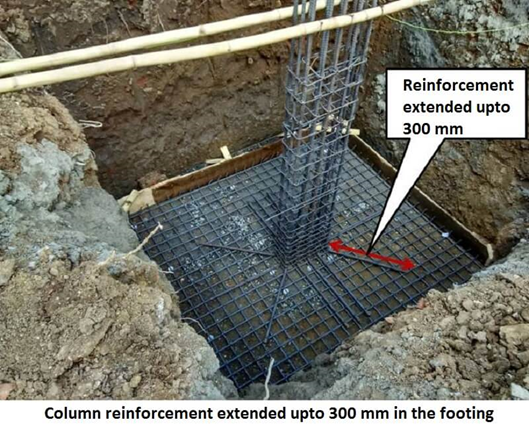
Proper spacing and anchorage of reinforcement are essential to ensure the strength and stability of RCC columns.
Key Guidelines:
Extension into Footing or Mat:
When a column connects to a footing or mat foundation, special confining reinforcement must be provided.
These reinforcements should be extended at least 300 mm into the footing or mat, or as specified in the structural drawing.
Spacing of Longitudinal Bars:
The spacing of longitudinal reinforcement bars should not exceed 300 mm along the periphery of the column. This helps in maintaining uniform strength and proper confinement of concrete.
Transverse Reinforcement in Columns (Stirrups)
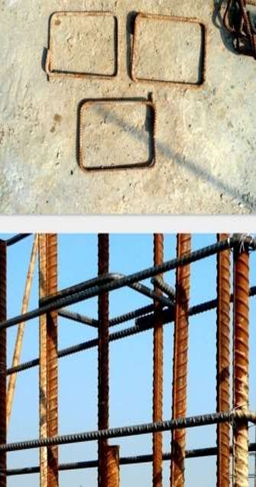
Transverse reinforcement, commonly known as stirrups or lateral ties, plays a crucial role in the performance of RCC columns.
Functions of Transverse Reinforcement:
- Maintains the position of longitudinal bars
- Prevents buckling of main reinforcement
- Avoids splitting of concrete
- Provides confinement to concrete, improving strength and ductility
As per IS 456: 2000 Guidelines:
Diameter of Transverse Reinforcement:
- Should not be less than one-fourth (1/4) of the diameter of the main bar
- In no case should it be less than 6 mm
Spacing (Pitch) of Stirrups
The spacing of transverse reinforcement should not exceed the least of the following:
- The least lateral dimension of the column
- 16 times the diameter of the smallest longitudinal bar
- 300 mm
Hooks in Stirrups
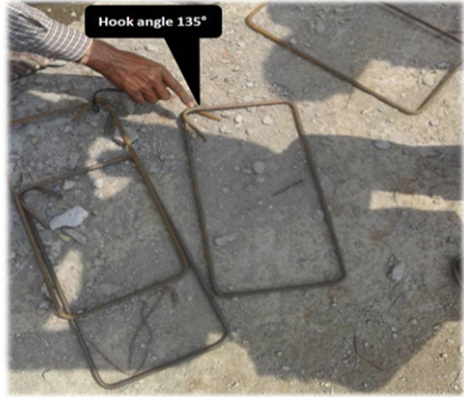
Hooks are an important part of transverse reinforcement (stirrups) and play a key role in maintaining the stability and safety of RCC structures.
Functions of Hooks:
- Help to resist expansion of reinforcement
- Ensure proper anchorage of stirrups
- Improve overall confinement of concrete
Important Guidelines:
This 135° hook is very important for seismic safety, as it prevents the stirrups from opening during earthquakes.
Always check the size and dimensions of stirrups before tying them in position.
The hook angle in stirrups or links should be 135°.
Overlapping of Reinforcement (Lap Length)
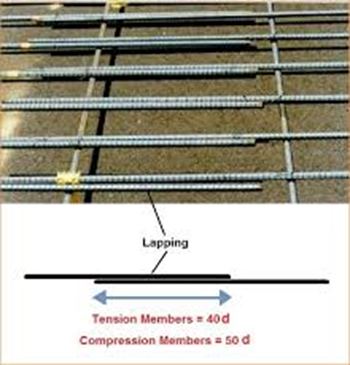
Overlapping of reinforcement bars is done when the available length of steel bars is not sufficient, but a longer continuous length is required in the structure.
What is Lap Length?
Lap length is the length of overlap between two reinforcement bars required to safely transfer stress from one bar to another.
Why is Lap Length Provided?
Reinforcement steel bars are generally manufactured in standard lengths of 12 meters.
During construction, when a longer length is needed, two bars are overlapped to maintain continuity and ensure proper load transfer in RCC members.
Typical Lap Length:
Type of stress (tension or compression)
Lap length usually ranges between:
👉 30d to 50d
(where “d” = diameter of the bar)
The exact lap length depends on:
Type of structural member (beam, column, slab)
Grade of concrete
Grade of steel
Column Lap Length – Important Guidelines
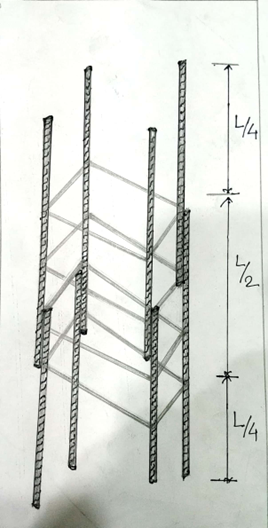
Proper lapping of reinforcement in columns is critical to ensure structural strength and avoid failure. Incorrect lap placement can lead to serious structural issues such as buckling or cracking Important Points to Remember:
- Location of Lapping:
Lapping should be provided at the center (mid-height) of the column, where the bending moment is minimum or nearly zero. - Alternate Lapping:
Laps should be provided alternately in different bars.
Avoid lapping all bars at the same location, as it may cause buckling and कमजोरी (weakness) in the column. - Closely Spaced Ties in Lap Zone:
Provide closely spaced lateral ties (stirrups) in the lapping zone to improve confinement and strength. - Avoid Joints:
Lapping should not be provided at column-beam-slab junctions, as these locations experience maximum stress. - Avoid Critical Zones:
Lapping should not be done at L/4 distance from the top and bottom, as these are critical stress regions.
Lap Length in Columns:
In columns, lap length is generally taken as:
24d to 40d (where “d” = diameter of the bar)
As per IS 456: 2000, lap length should not be less than 75 mm.
Lapping should be avoided in tension zones of structural members.
Lap Length in Beam
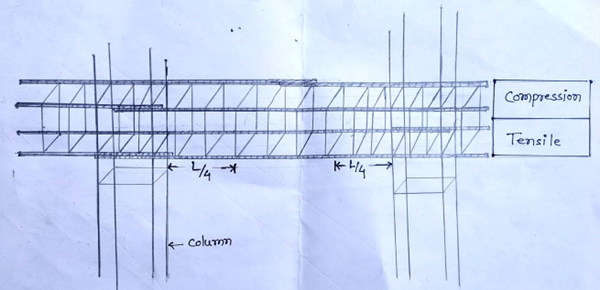
Proper lapping of reinforcement in beams is essential to ensure safe load transfer and structural performance. The lap length and its location depend on whether the bar is in the compression zone or tension zone.
Lap Length Guidelines:
- Compression Zone (Top Bars):
- Lap length is generally taken as 24d
(where “d” = diameter of the bar)
- Lap length is generally taken as 24d
- Tension Zone (Bottom Bars):
- Lap length is generally taken as 45d
Important Points to Remember:
- Top Bars (Compression Zone):
- Lapping should not be provided within L/3 distance from both ends of the beam
- It is recommended to provide lap at the mid-span
- Bottom Bars (Tension Zone):
- Lapping should be provided near the column junction or at L/4 distance from the column face
- Avoid lapping at the mid-span of the beam
- Stirrups Spacing:
- Provide closely spaced stirrups near the supports (columns)
- Keep normal spacing at mid-span
- Alternate Lapping:
- Lapping of bars should be done alternately
- Avoid lapping all bars at the same section to prevent weak zones
Correct lap placement in beams ensures better strength, crack control, and durability of the structure.
Reinforcement in Beam
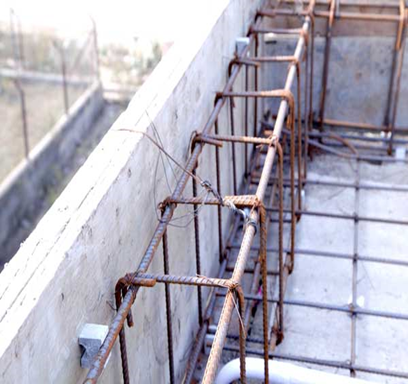
Beam reinforcement is essential for resisting bending and shear forces, ensuring the strength and stability of the structure.
General Reinforcement Details:
- Number and Size of Bars:
- Typically, a beam consists of at least 4 reinforcement bars
- Bottom bars (tension zone): 2 bars of 12 mm diameter
- Top bars (compression zone): 2 bars of 10 mm diameter
- Concrete Cover Requirement:
- Reinforcement must have adequate concrete cover
- This cover protects steel from:
- Weathering effects
- Corrosion
- Fire exposure
- Clear Cover Range:
- The concrete cover generally varies between:
👉 25 mm to 80 mm - It depends on the environmental conditions and exposure of the structure
- Clean bars ensure proper bonding between steel and concrete
- The concrete cover generally varies between:
- Cleanliness of Reinforcement:
- Reinforcement bars must be clean and free from rust, dust, oil, or grease before placement
Reinforcement in Slab (As per IS 456: 2000)
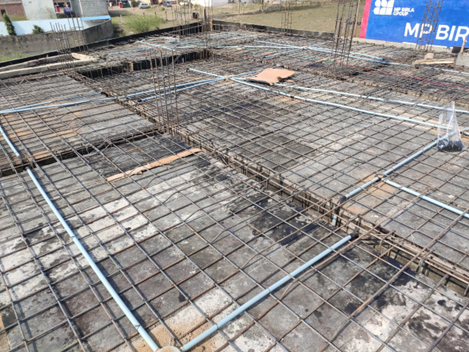
Reinforcement in slabs is provided to resist bending stresses and control cracking. Proper detailing of slab reinforcement ensures strength, durability, and serviceability of the structure.
Minimum Reinforcement:
The minimum reinforcement in slabs should not be less than the following:
- 0.15% of the total cross-sectional area for Fe-250 steel
- 0.12% of the total cross-sectional area for Fe-415 and Fe-500 steel
Maximum Diameter of Bars:
- The diameter of reinforcement bars in slabs should not exceed 1/8 of the total thickness of the slab
Spacing of Reinforcement Bars:
Maximum spacing should be:
👉 5d or 450 mm (whichever is smaller)
(where “d” = effective depth of slab)
Main Reinforcement:
Maximum spacing should be:
👉 3d or 300 mm (whichever is smaller)
Clear Cover in Slab
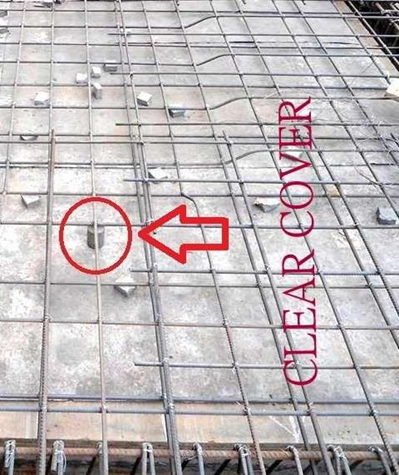
Clear cover is the distance between the surface of the concrete and the nearest reinforcement bar. It is essential for protecting steel and ensuring durability of the slab.
Key Points:
- Cover Blocks (CC Blocks):
Cover blocks are used to maintain the required clear cover during reinforcement placement. - Typical Clear Cover:
Generally, a clear cover of 15 mm to 20 mm is provided for slab reinforcement. - Cranking of Bars:
Alternate main reinforcement bars can be cranked near the supports to resist negative bending moments and improve structural performance.